GCSE DESIGN & TECHNOLOGY
GRAPHIC PRODUCTS
2005
1 A puzzle booklet is being produced by
your school’s Design & Technology department. The booklet is to have four
(4) pages of A5 size and is to be printed on both sides of a single sheet of A4
paper.
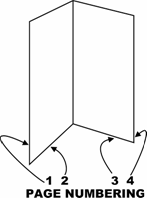
The design of the layout of the pages in the booklet is
shown alongside.
(a)
On the diagrams below, write in the page numbers, to show
how the pages will be laid out on the A4 paper.
[3]
Page 4 has been done for you.
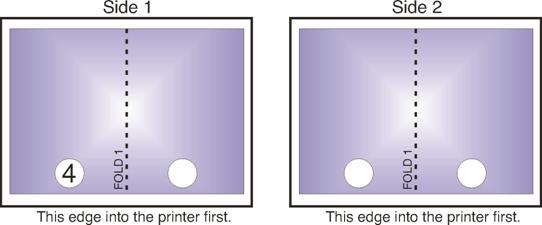
new diagram needed
(b) The A4 paper has to be made into the
booklet.
Three
steps in the process are given below.
Arrange
the steps in the order that they would be carried out. [3]
|
CROP |
FOLD |
PRINT |
Step 1.
……………………………………….
Step
2. ……………………………………….
Step
3. ……………………………………….
(c) One of the puzzles in the booklet is about Orthographic
Drawing.
Solutions to the puzzles will be provided.
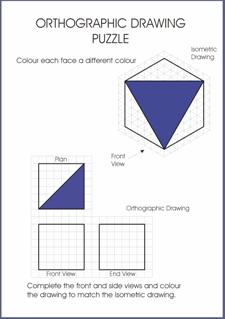
The Orthographic Drawing puzzle page is shown
alongside.
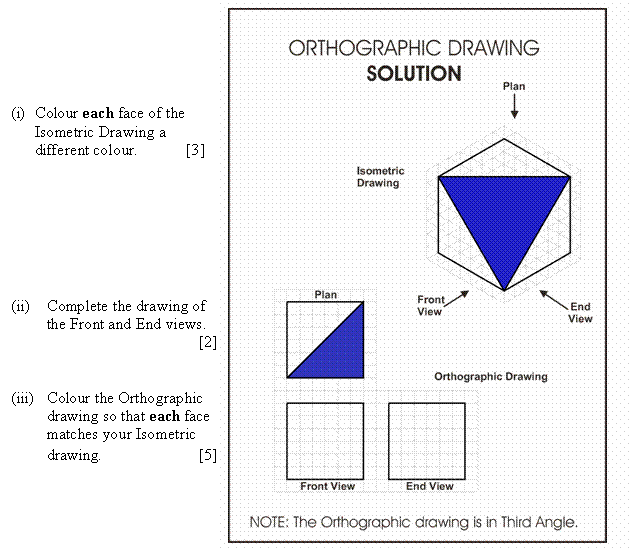
Complete
the Solution Sheet below.
2. A net for a simple box is shown below.
Most features of the net have been named.
This
is the area between the outline of the net and the edge of the printed area
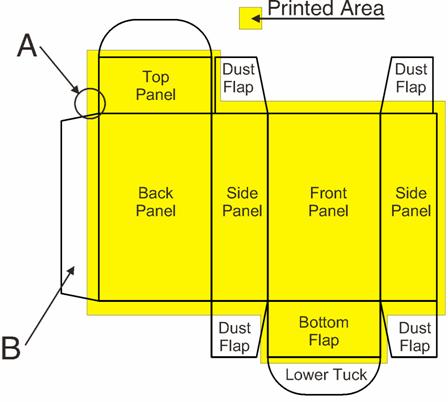
(a) State the names for the parts labelled A and B. [2]
A
is called ……………………………………………
B
is called ……………………………………………
(b) A prototype of the net is to be
manufactured using
State
what the letters
C………………. A……………..
M………………
(c) A manufacturing company is going to make
10,000 of the nets.
Name the
manufacturing process that would be used to cut out the nets. [2]
………………………………………………………………………….
(d) Shown below is a net of a different box. The bottom of the box
folds together and locks shut without the use of glue.
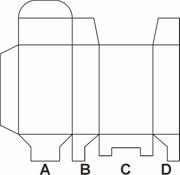
(i) Complete the table below to show the
order that the flaps should be folded to
close and lock the bottom of the box.
The first step has been done for you. [3]
|
Step 1 |
Step 2 |
Step 3 |
Step 4 |
|
C |
|
|
|
(ii)
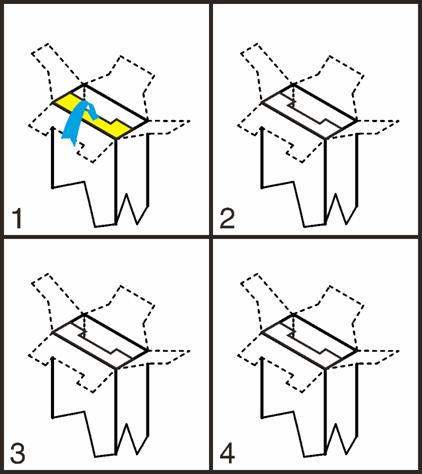
Instructions are needed to show how the bottom of the
box is to be folded. Complete the diagrams to show each of the four steps.
The first step has been done for you. [6]
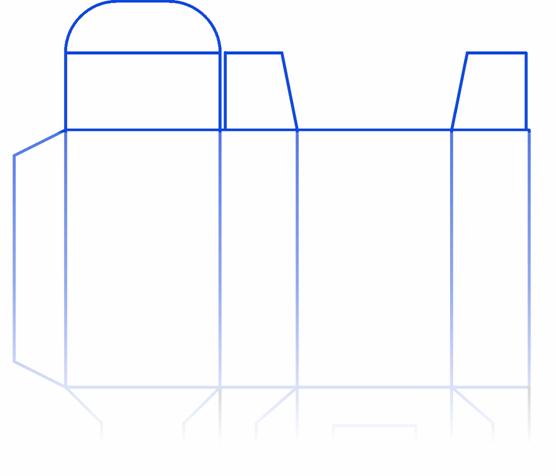
(e) When the net was assembled as a
prototype it was found that the top was difficult to open.
The drawing below shows a partial
net of the top part of the box.
Add details to the drawing to show
how you would make the top of the box easier to open. [6]
BLANK PAGE
3.

a) Complete the sentences about a scanner using the correct words from the list below. [3]
INPUT IMAGES OUTPUT
2D REAL
i) A
flat bed scanner is a computer _____________ device.
ii) It is used to copy _______________ into a computer.
iii) It is usually used to copy ______ objects but can be used to
copy 3D objects too.
b) Scanners have to be set up to give the most appropriate image.
A typical scanner
control window is shown below with some of the options available shown
alongside.
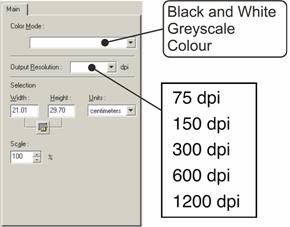
Note: dpi stands for dots per inch.
Select the setting that would be
the most appropriate for the following scanning jobs and explain your choice. 2 x [4]
i)
Scanning a black line drawing for use in a web page
or an on screen presentation.
Colour
Mode: ________________________ Output resolution: ____________
Explanation
for your choice of settings:
………………………………………………………………………………………
………………………………………………………………………………………
ii)
Scanning a colour photograph to print a high quality,
A4 sized image using an inkjet printer.
Colour
Mode: ________________________ Output resolution: ____________
Explanation
for your choice of settings:
………………………………………………………………………………………
………………………………………………………………………………………
c)

Underline the correct word in each of the
sentences below. [4]
i) To
carry out this editing I would use a vector / bitmap editing programme.
ii) To select the background I would use the mask /
crop tool.
iii)
To change the background to white I would paint /
invert it.
iv)
To make the picture brighter I would posterize
/ adjust the contrast of the picture.
4.
Study the photographs below. They show three “stick”
type cosmetic products.
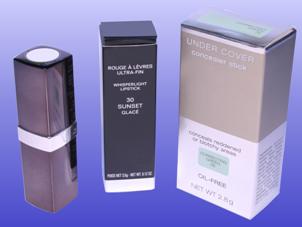


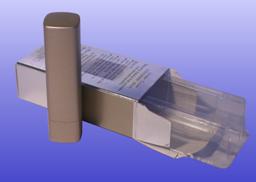
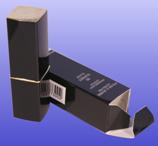

(a) Think about the packaging of the three products and answer the following
questions.
(i)
Explain why product A might be more environmentally friendly than product
C. [2]
………………………………………………………………………………………………
………………………………………………………………………………………………
(ii) The packaging of product C includes a plastic liner that holds the product.
State
one method of
making the plastic liner. [2]
………………………………………………………………………………………………
(iii) The card packages for
products B and C have been laminated.
Give one reason for this. [2]
………………………………………………………………………………………………
………………………………………………………………………………………………
(b) The
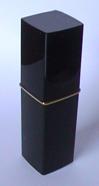
picture shows a block model of the case used in Product A. (i) The table below
lists a selection of materials
that might be used for the
block model. Complete
the table by filling in the gaps.
[6]
|
Name of Material |
Material Type |
Suitable Adhesive |
Suitable Finish |
|
MDF |
Wood |
|
Varnish |
|
Acrylic |
|
Tensol
Cement |
|
|
Cardboard |
Paper |
|
Paint |
|
Expanded Polystyrene |
|
|
Fill and
Paint |
(ii)
State which of these materials you would use to make the model.
……………….………………………………
Explain why you have selected this
material. [3]
………………………………………………………………………………………
………………………………………………………………………………………
………………………………………………………………………………………
(c) Use the grid
below to make sketches of each of the parts you would have to make to produce
the block model. [9]

5. Sketches of a single use film
camera showing some dimensions are drawn below.
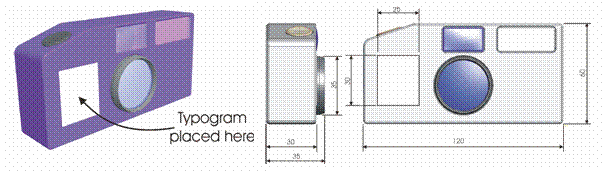
The camera needs to have a typogram made of the word “zoom” attached
where shown and a blister or bubble package to allow the camera to be displayed
for sale.
Note: a
typogram is a logo made up of letters where the letters express the meaning of
the word.

An
examples is: WAVE might be
in a typogram.